






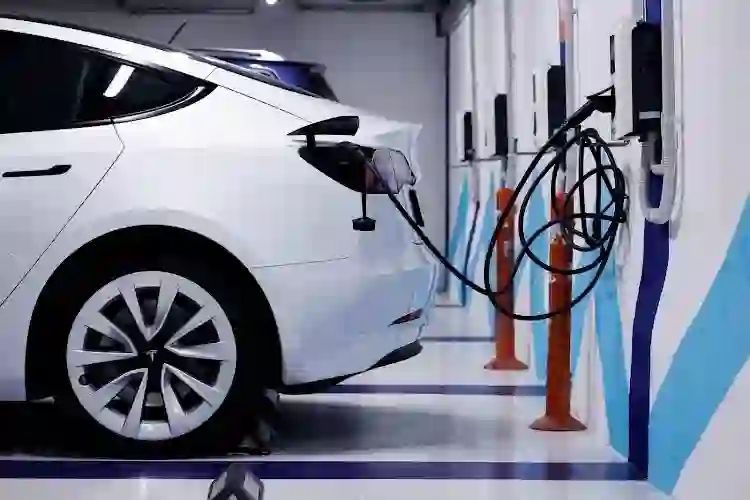
The average price of electric cars in Europe fell in 2025 for the first time in four years, boosting sales across the continent, according to a report released on Thursday, March 12.
The decline comes ahead of a European Union debate over proposals that could relax climate targets for car manufacturers, including the planned 2035 ban on new petrol and diesel vehicles.
The report, by clean transport advocacy group Transport & Environment, showed that electric vehicles (EVs) made up about 19 per cent of all new cars sold across the EU and Norway in 2025, up from roughly 14 per cent in 2024.
The group said the rise in EV demand was driven in part by a drop in prices. On average, the cost of an electric car fell by four per cent — around €1,800 — bringing the typical price to €42,700 ($49,390). TRUETELLS Nigeria reports that this reduction was largely due to the launch of smaller, more affordable EV models.
Transport & Environment credited the EU’s emission reduction policies with pushing automakers to make electric cars more accessible. “Even if the automotive industry doesn’t like to admit it, the EU’s CO2 standards have enabled hundreds of thousands of Europeans to access more affordable electric cars,” the organisation said.
EU regulations require carmakers to meet strict carbon dioxide targets or face heavy fines. According to the report, most manufacturers are on track to meet the 2025–2027 emissions goals, a key milestone toward the bloc’s long-term climate objectives.
However, industry representatives have warned that the current targets may be overly ambitious. EU environment ministers are set to meet next week to discuss proposals that could soften the 2035 ban on petrol and diesel vehicle sales.
One historic barrier to EV adoption has been the higher upfront cost compared with traditional vehicles. Transport & Environment noted that price parity could be achieved by 2030 if current policies remain in place. The group cautioned that weakening emissions targets could slow progress toward making EVs widely affordable.
Under the proposals introduced in December, new vehicles would need to reduce exhaust emissions by 90 per cent from 2021 levels by 2035, instead of the originally planned 100 per cent. The plan also includes “super credits” for small, affordable EVs produced within the EU to help automakers meet targets.
Meanwhile, the European Automobile Manufacturers’ Association is pushing for adjustments, including extending the 2030 intermediate target timeline from three to five years, among other concessions.
If you want, I can also make a shorter, punchy version of this article for quick online reading, keeping the TRUETELLS Nigeria credit visible. That version would be ideal for news feeds.
Do you want me to do that?