



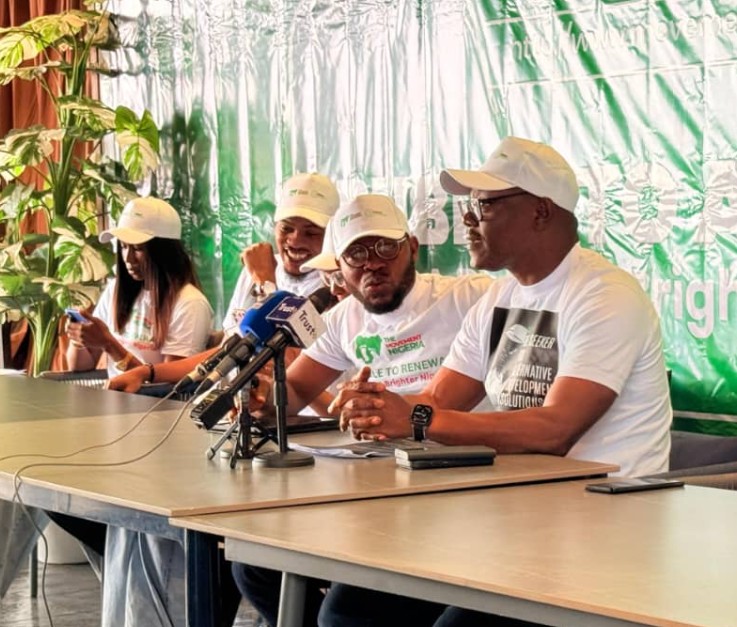
A fresh wave of internal tension has emerged within the Obidient Movement following the resignation of its Director of Finance, Dr. Peter Agada, who cited poor coordination and lack of structure as reasons for his decision.
Agada announced his exit during a press briefing in Abuja, revealing that he had submitted his resignation letter days earlier. He also introduced a new political platform, “The Movement Nigeria,” signaling a possible shift in the coalition that supported Labour Party’s 2023 presidential candidate, Peter Obi.
Explaining his decision, Agada said the movement’s organisational shortcomings were incompatible with his professional standards. He noted that he had been left out of key meetings and activities, despite holding a critical leadership role.
According to him, his resignation was not driven by personal grievances but by the need for a more structured and coordinated system. He emphasized that the new platform he is championing would not be centered on any individual, distancing it from allegiance to major political figures.
Agada also clarified that he has no personal relationship with Obi beyond his former role in the movement, describing their interactions as strictly official.
On funding, he dismissed claims of external sponsorship, stating that “The Movement Nigeria” would operate on a collective contribution model rather than relying on a single financier.
Reacting to the development, the National Coordinator of the Obidient Movement Worldwide, Dr. Yunusa Tanko, expressed disappointment but played down the impact of Agada’s departure. He stated that the group is currently undergoing restructuring aimed at adopting a more collective leadership approach.
Tanko added that he had not received any formal resignation letter from Agada but acknowledged that political realignments are common as the 2027 elections approach. He maintained that the movement remains united and committed to its objectives.
The development highlights growing concerns over internal cohesion within the Obidient Movement, as shifting alliances and restructuring efforts begin to shape the political landscape ahead of the next general elections.